TL;DR
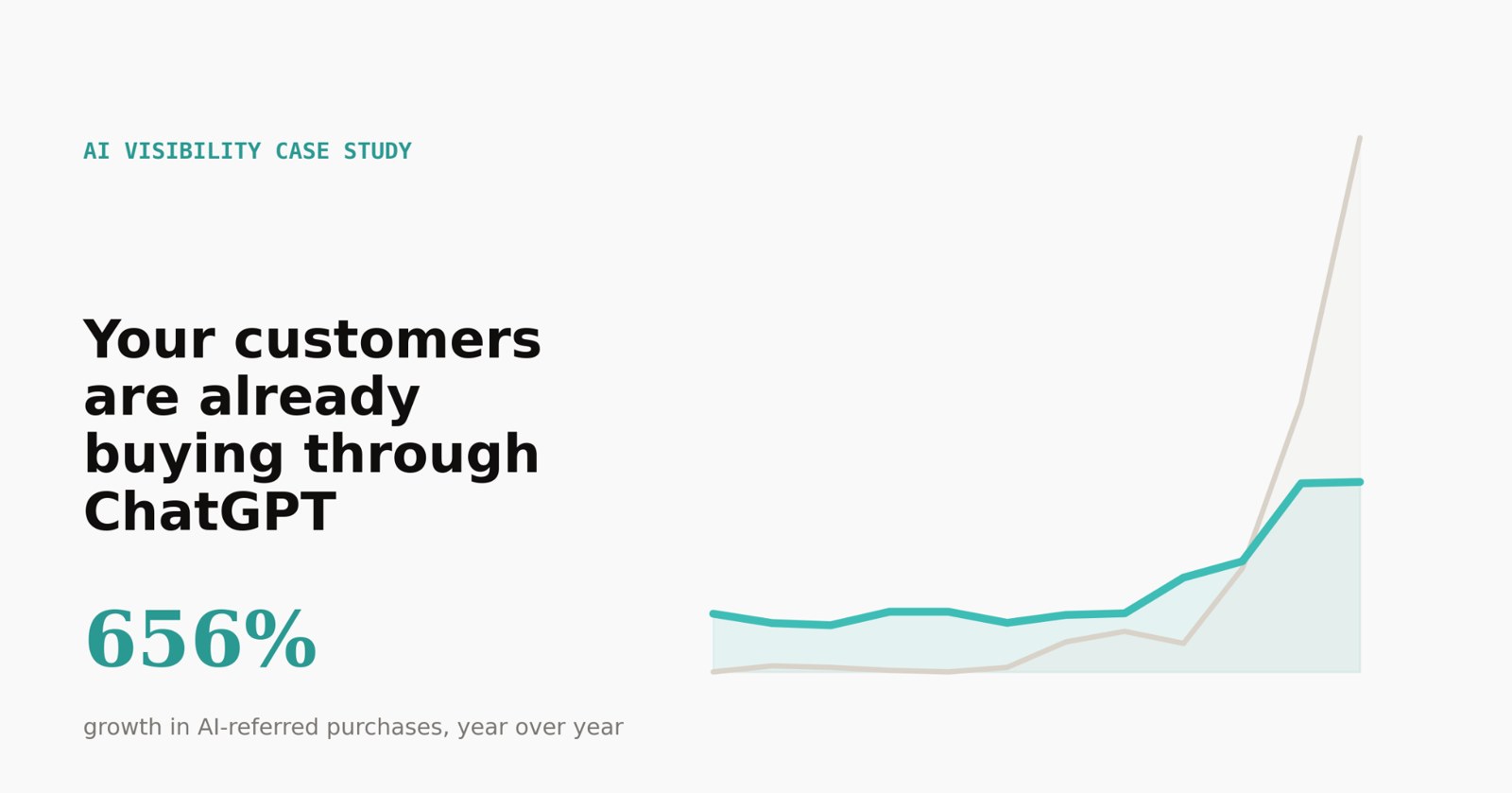
- Purchases and revenue through ChatGPT and other AI tools grew 656% and 479% year over year, same accounts, same measurement.
- Growth touched over 80% of active accounts, not concentrated in one brand.
- AI-referred visitors convert at more than double the organic rate, and add to cart at up to 7.7x in top-performing accounts.
- AI is still a small slice of total revenue, but that share is growing about 5x faster than a year ago.
- ChatGPT accounts for nearly all AI-referred traffic today; other assistants are starting to add shopping features.
We tracked every purchase that came through ChatGPT and other AI tools across our client portfolio, spanning pharmacy, health, wellness, travel and specialty retail. In the 12 months to June 2026, purchases through that channel grew 656% year over year, and revenue grew 479%.
Same accounts, same measurement, one year apart. Not a projection.
It’s not one client
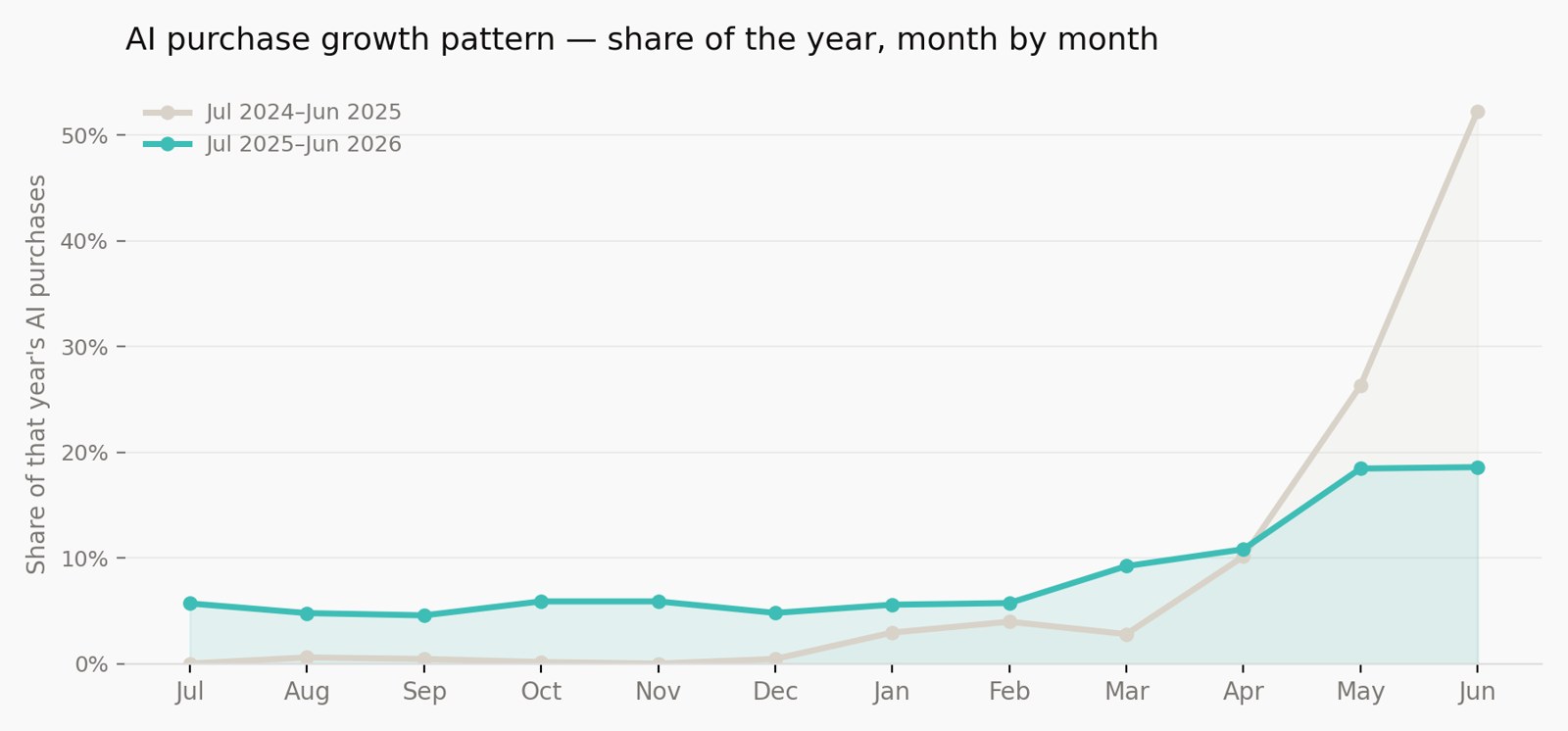
Over 80% of our active accounts already have at least one AI-driven purchase this year. That’s the part worth sitting with. This isn’t one brand getting lucky with a viral ChatGPT mention. It’s a pattern showing up across accounts of very different sizes, in very different categories.
Organic, over the same period, was roughly flat: down slightly in both purchases and revenue (revenue down about 7%). AI isn’t replacing a declining channel. It’s new growth arriving on top of a stable one.
What AI visitors do differently
Across the portfolio, visitors who arrive from ChatGPT and other AI tools behave differently than organic search visitors, and the gap isn’t small.
| Metric | AI | Organic | Difference |
|---|---|---|---|
| Product page view rate | 89.4% | 67.8% | 1.3x |
| Add-to-cart rate | 17.9% | 9.3% | 1.9x |
| Begin checkout rate | 8.3% | 3.1% | 2.7x |
| Purchase conversion rate | 2.7% | 1.2% | 2.2x |
| Average order value | 115 (index) | 100 (baseline) | +15% |
Among accounts with reliable AI traffic volume, roughly two-thirds see add-to-cart rates hit as high as 7.7x the organic rate. People arriving from ChatGPT tend to already know what they want. They’re not browsing, they’re checking out a specific answer to a specific question, and if the page delivers, they buy.
There’s one metric where organic still wins: engagement rate, 61.5% vs 50.2%, an 18% gap in organic’s favor. The likely explanation, not yet confirmed, is that a lot of AI-referred visits are short, single-purpose trips. They convert fast or they leave fast. Organic search still brings the longer browsing sessions. Worth knowing, not worth spinning.
Where the traffic actually comes from
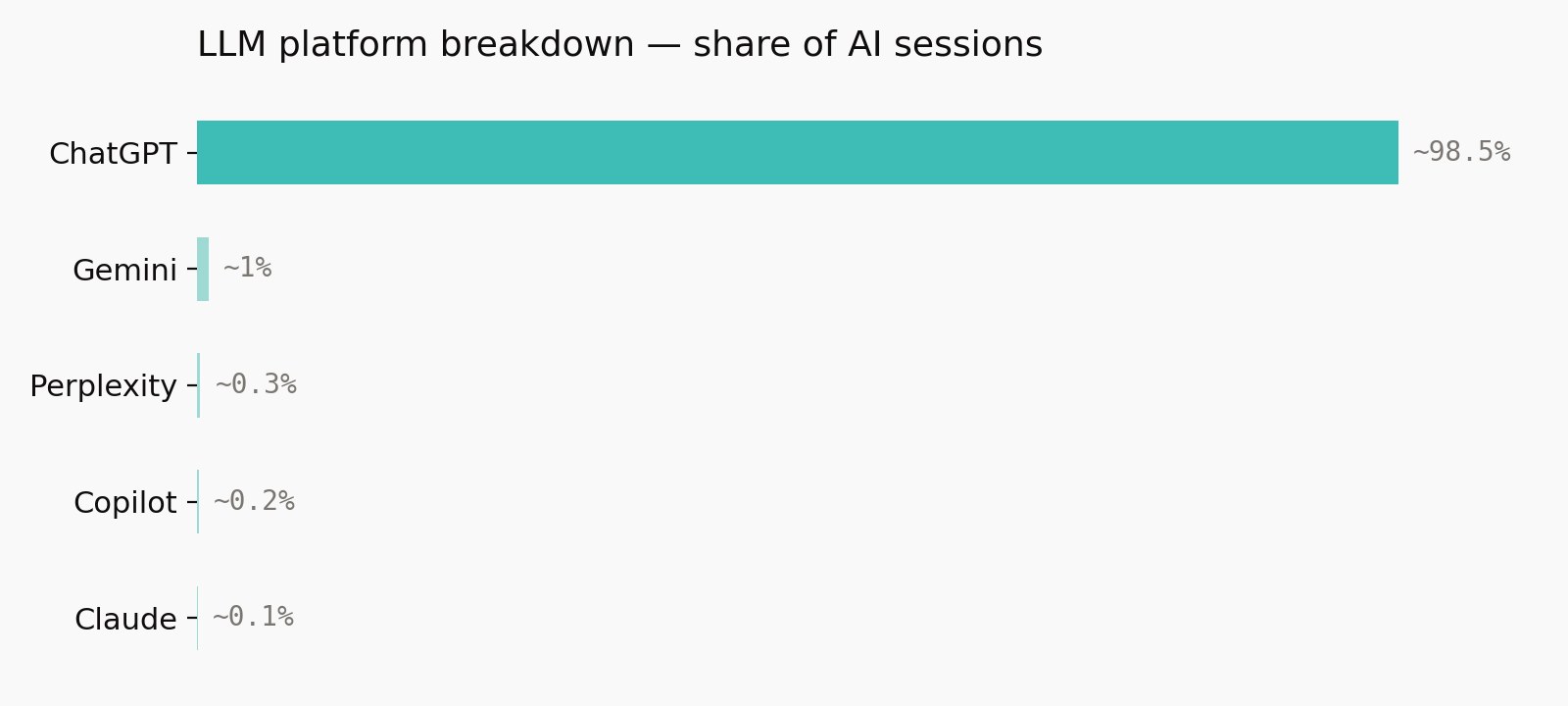
ChatGPT accounts for roughly 98.5% of AI-referred sessions across this portfolio. Gemini, Perplexity, Copilot and Claude split the remaining 1.5% between them. That’s not a tracking gap, it’s the current shape of the market. Gemini is starting to add shopping features, Copilot is embedded across Microsoft 365, and both will matter more over the next year. Right now, if you’re optimizing for one platform, it’s ChatGPT.
Why some pages get picked up and others don’t
The pages getting the most AI-referred traffic across this portfolio aren’t the biggest or most established ones. They’re pages that answer a specific question clearly: a clear entity stated up front, a direct answer in the first 150 words, structured data that removes any ambiguity about what the page is and who’s behind it.
Consistently, that means product pages with strong informative content, alongside blog content answering specific health and condition questions, the exact kind of thing someone would type into ChatGPT.
Your customer is already asking ChatGPT something you know the answer to. Whether ChatGPT finds it on your site or a competitor’s comes down to structure.
Two honest caveats
AI is still a small slice of total revenue: 0.26% of portfolio-wide revenue this year, up from 0.05% last year. A real 5x increase in share, but a small number in absolute terms. AI traffic today looks a little like search traffic did in its early, unmistakable-but-still-tiny days. We’re not claiming it’s already big. We’re pointing at the trajectory.
Order value tells two different stories depending on what you include. Blended across the whole portfolio, AI order value runs slightly above organic, but that’s driven by one large travel account with high-value bookings. Strip that account out and look only at retail and pharmacy: AI order value runs about 24% lower than organic. That’s consistent with AI traffic skewing toward newer customers making a first purchase rather than repeat buyers with an established basket size.
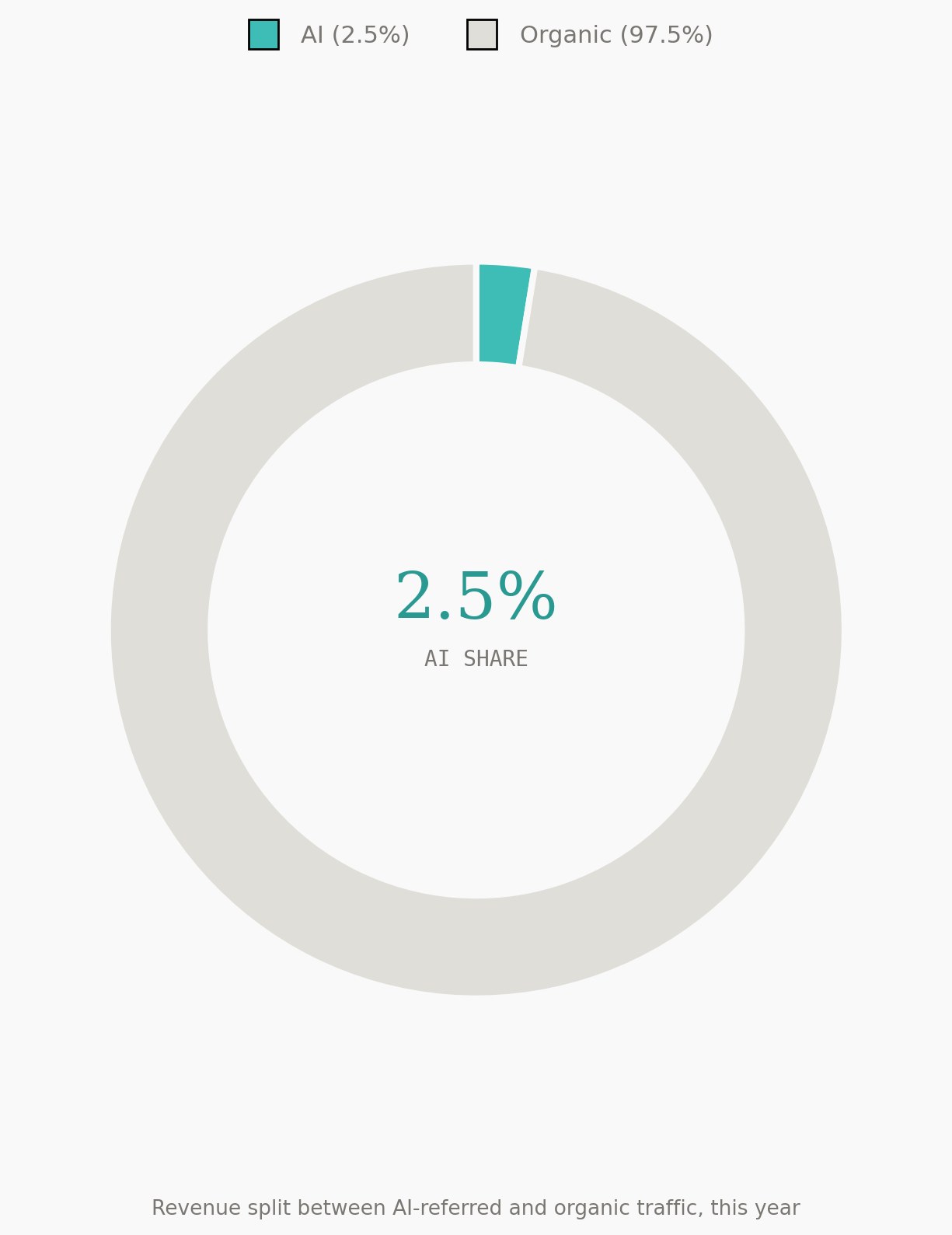
The chart below is a different, narrower comparison: AI’s share of AI plus organic revenue combined, which is 2.5% this year. That’s not the same number as the 0.26% above. This one leaves out paid, direct and social.
How we make this happen
Technical access. We check whether AI crawlers can actually reach the content, not just whether robots.txt allows it. That means confirming key content is visible in the raw HTML rather than something that only appears after JavaScript runs, and checking CDN, WAF and bot-management rules that a clean robots.txt won’t tell you about. Ranking in Google doesn’t mean an AI crawler can reach the page. And being cited isn’t the same as being able to complete a sale: an AI agent can add to cart, apply a promo code and check out, but only against a live site that actually works. Clean feed data doesn’t save a sale if checkout is broken.
Content AI can cite. Reaching a crawler isn’t the same as being worth citing. We shape how models describe the brand itself and the topics it should own, fix the third-party sources (Wikipedia, directories, press coverage) models draw from, audit structured data, and write priority pages that are original and consistent with how the brand shows up everywhere else, not thin copy padded for keywords. Then we check whether it worked: share against named competitors, how accurately models describe the brand, and which of the brand’s own topics actually surface in AI answers. Overclaiming works against you here too: models weight verifiable specifics, real certifications, sourced reviews, concrete numbers, over marketing adjectives, so exaggerated claims get discounted rather than cited.
Measurement that proves it. We track two different things, because they move on different timelines. What a model already knows about the brand from training, which is stable and slow to shift. And what it actually retrieves and shows when someone asks it something right now, which changes week to week and is where most near-term work pays off. Both sit in one dashboard next to classic search performance, tracked the same way, month over month.
The takeaway
Purchases through ChatGPT and other AI tools grew 656% year over year, revenue grew 479%, spread across over 80% of active accounts, not concentrated in one brand. If your customers are asking ChatGPT questions your site could answer, the structure decides whether they find you or a competitor.