TL;DR Greece has built two linked pieces of AI infrastructure. DAEDALUS is the country's most powerful supercomputer, while Pharos is the service that helps startups, researchers and public bodies use it. Together they could make ambitious AI work cheaper, improve technology built for the Greek language and give more researchers and engineers a reason to build at home. DAEDALUS has already proved its performance in an external benchmark, but Pharos will matter only if access becomes simple and useful.
For most of the past decade, a Greek startup or university lab that needed serious computing power to train an artificial-intelligence model had two options: rent it from a cloud provider abroad at painful cost, or do without. That quiet constraint shaped what Greek teams could even attempt. In 2025 and 2026, two projects began to change the picture: the DAEDALUS supercomputer and the Pharos AI Factory.
They are not the same project and do not perform the same role. DAEDALUS has been assembled and benchmarked and is due to enter full operation at Lavrion. Pharos is being developed as the service layer through which startups, researchers and public bodies will access part of its capacity. This article explains who runs each project, why it matters and how the two fit together, before assessing whether that promise is likely to hold.
What is DAEDALUS?
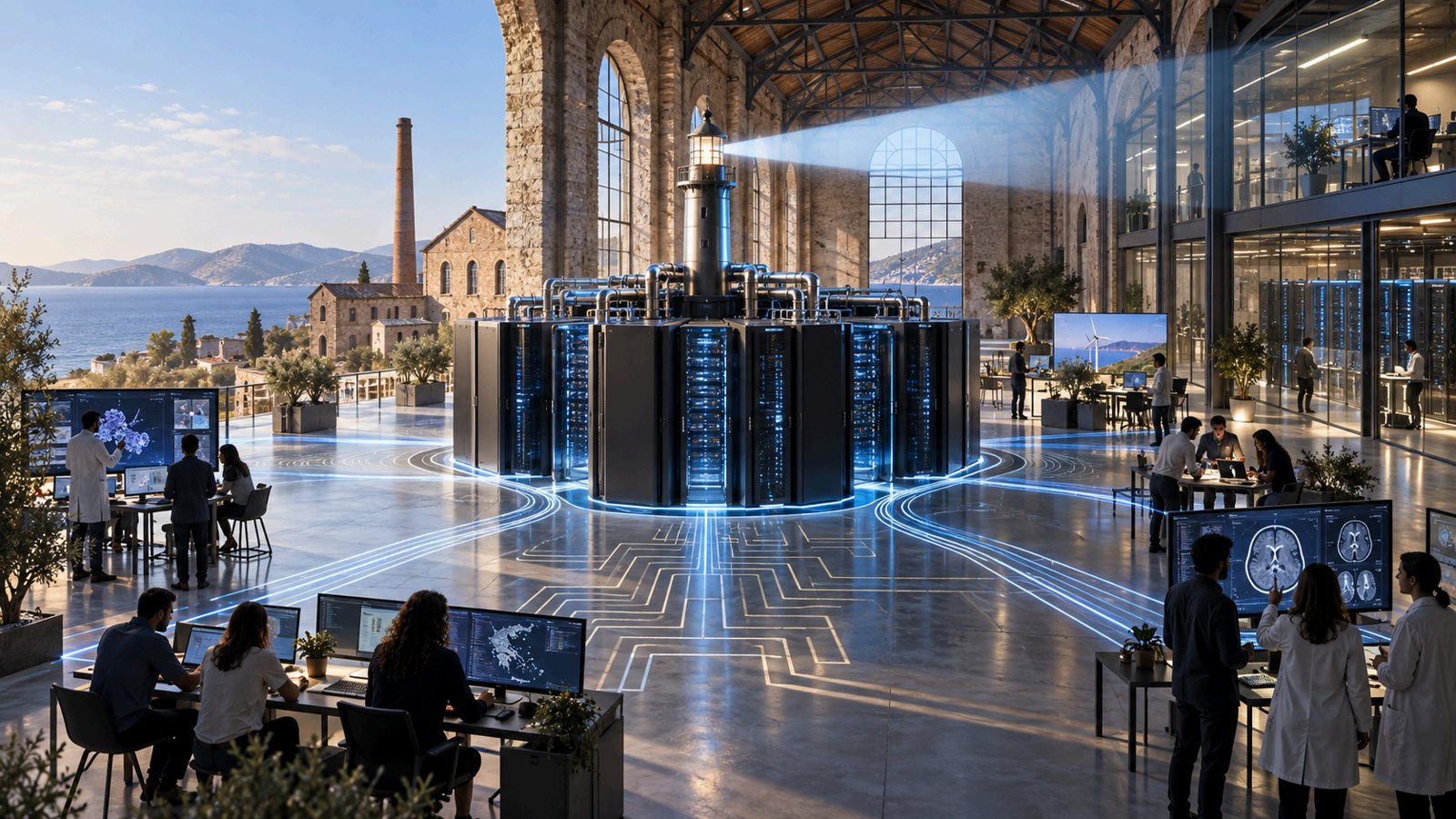
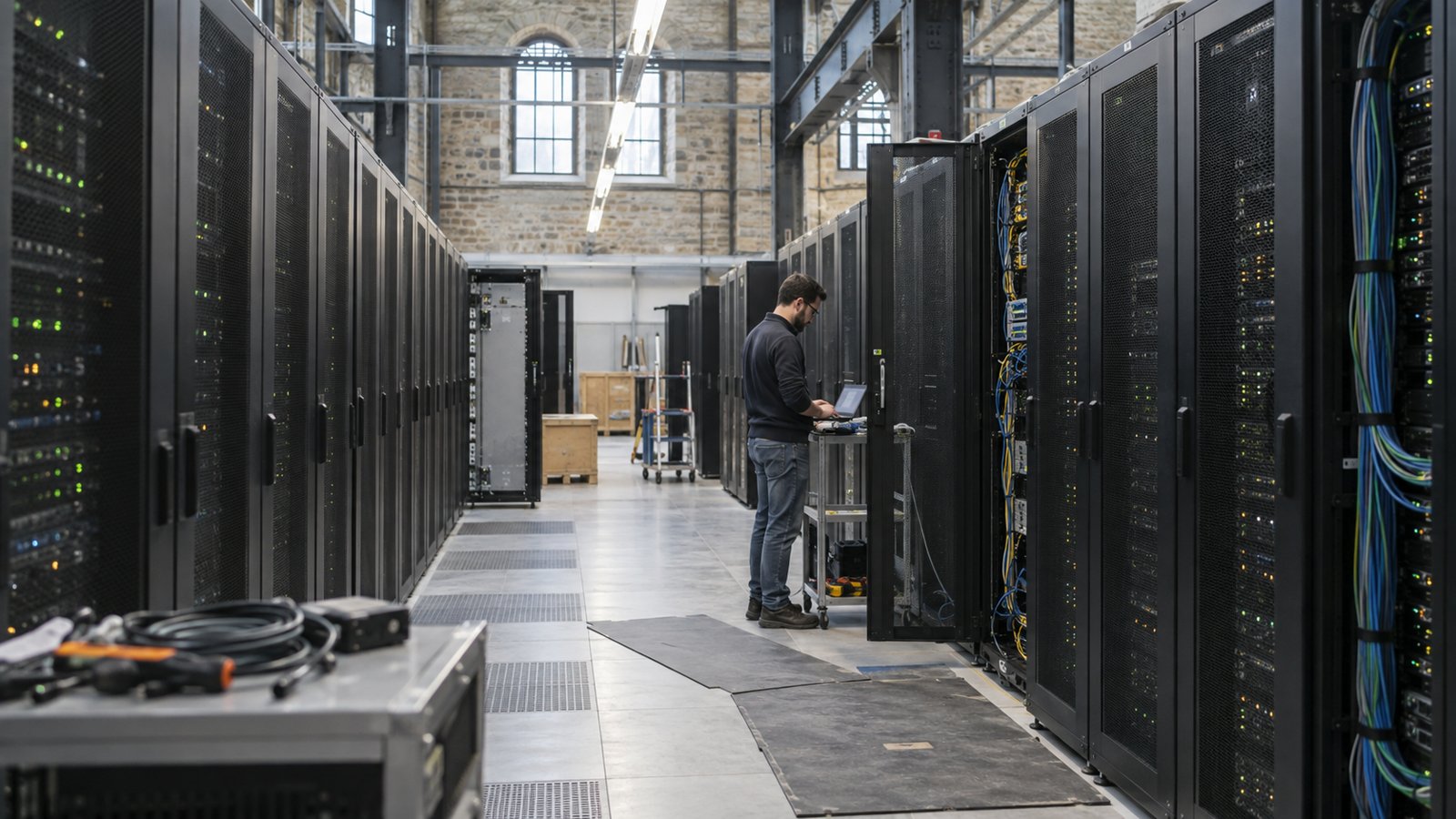
DAEDALUS is Greece's new national supercomputer. Think of it as the engine room: thousands of processors working in parallel on problems that would overwhelm an ordinary computer. Hewlett Packard Enterprise built it on its HPE Cray architecture using NVIDIA Grace Hopper GH200 superchips, hardware designed for large-scale scientific calculations and AI. When operational, the system will use direct liquid cooling and will be housed inside a restored nineteenth-century power station at the Lavrion Technological and Cultural Park, a site owned by the National Technical University of Athens.
The numbers give a sense of scale. DAEDALUS reached 85.69 petaflops on the June 2026 TOP500 benchmark, against a theoretical peak of 115.08 petaflops, and debuted at number 31 in the world (a petaflop is one quadrillion floating-point operations per second).
At the measured rate, DAEDALUS can do in one second what would take one person about 2.7 billion years if they completed one operation every second without stopping. It also placed 23rd on Green500, which ranks systems by energy efficiency. DAEDALUS is not Greece's first TOP500 machine. ARIS entered the ranking in 2015, but DAEDALUS is by far the most powerful Greek system yet. The National Herald reported that it was assembled and tested at HPE's factory in the Czech Republic before shipment to Lavrion.
The figures reported for DAEDALUS cover different parts of the project. EuroHPC lists EUR 36 million as the acquisition cost of the supercomputer, while GRNET puts the wider project at EUR 58.9 million including VAT. That larger figure includes EUR 41 million for the computing equipment, storage, software and training, plus EUR 17.9 million for the Lavrion data centre and its electromechanical infrastructure. EuroHPC is funding 35% of the acquisition cost, with the remaining 65% coming through Greece's Recovery and Resilience Plan, Greece 2.0. Cyprus, Montenegro and North Macedonia are also members of the consortium and receive access in proportion to their contributions.
GRNET, known in Greek as EDYTE, is responsible for building and operating DAEDALUS under the Ministry of Digital Governance and Artificial Intelligence. Its board is chaired by Stefanos Kollias, emeritus professor at the National Technical University of Athens. Kollias has described the machine as a major step for Greek research and the computing foundation beneath Pharos. Running it day to day will take more than hardware: reporting around the launch put the workforce at about 200 people to prepare the site and machine, with 50 to 60 GRNET staff needed to operate and support it.
What is Pharos?
Pharos is the part that turns DAEDALUS from infrastructure into a service people can use. It is Greece's AI Factory, one of the first seven approved by EuroHPC. Here, factory does not mean a single industrial building. It means a production line that combines computing power with trusted data, tools, pre-trained models and expert support, helping teams move from an idea to a prototype and then to a real product. EuroHPC calls this a one-stop shop for AI.
Pharos focuses on three areas chosen to match national needs: health, the Greek language and culture, and sustainability, including energy, the environment and climate. It has a budget of EUR 30 million, split evenly between EuroHPC and Greek national resources, and formally began on 1 April 2025 as a 36-month programme. A government explainer by Minister of State Akis Skertsos described it as a one-stop shop that helps teams move from an idea towards production.
Late in 2025, Greece passed Law 5263/2025, creating the state-owned Hellenic Artificial Intelligence Factory S.A. to run Pharos. The company was established in February 2026, with its headquarters at the Demokritos research park in Agia Paraskevi. It can create spin-offs, manage intellectual property and sell AI products and services in Greece and abroad. Its chief executive is Afrodite Sevasti. At the Growthfund Investor Summit in June 2026, Sevasti said Pharos had brought its first four customers onto the platform and made an open Greek-language model available there. It was not Greece's first open model: the Athena Research Center released Meltemi in 2024, followed by Llama-Krikri-8B in 2025.
GRNET leads the Pharos consortium, whose core partners include the Demokritos research centre, the National Technical University of Athens, the Athena Research Center and Growthfund.
How the two connect, and why that matters
The relationship is simple: DAEDALUS will provide the computing power, while Pharos is intended to make part of that capacity accessible for AI projects. A significant share of the supercomputer is reserved for work handled through Pharos, with connectivity provided through GRNET and its RE-Cloud service at speeds of up to 400 gigabits per second.
The two projects depend on each other, on its own, DAEDALUS is a spectacular but intimidating resource and a small startup cannot simply walk up to a top-31 supercomputer and use it; it lacks the know-how, the clean data, the compliance setup and the tooling. That is precisely the gap Pharos fills, by handling the unglamorous work of access rules, data preparation, anonymisation and technical support. Without Pharos, DAEDALUS mostly serves the researchers who already knew how to use big machines. Without DAEDALUS, Pharos is a support service with no engine to offer.
Which project matters more depends on what is being measured. DAEDALUS is the larger engineering achievement and returned Greece to the TOP500 at a far higher rank than ARIS achieved in 2015. Pharos could have the greater effect on everyday economic use because it decides whether startups and researchers outside the established supercomputing community can benefit from that capacity. Greece's link between the factory and a real supercomputer also helped make its bid credible when EuroHPC selected the first seven AI Factories.
Why this matters for Greece
Cheaper access to serious compute
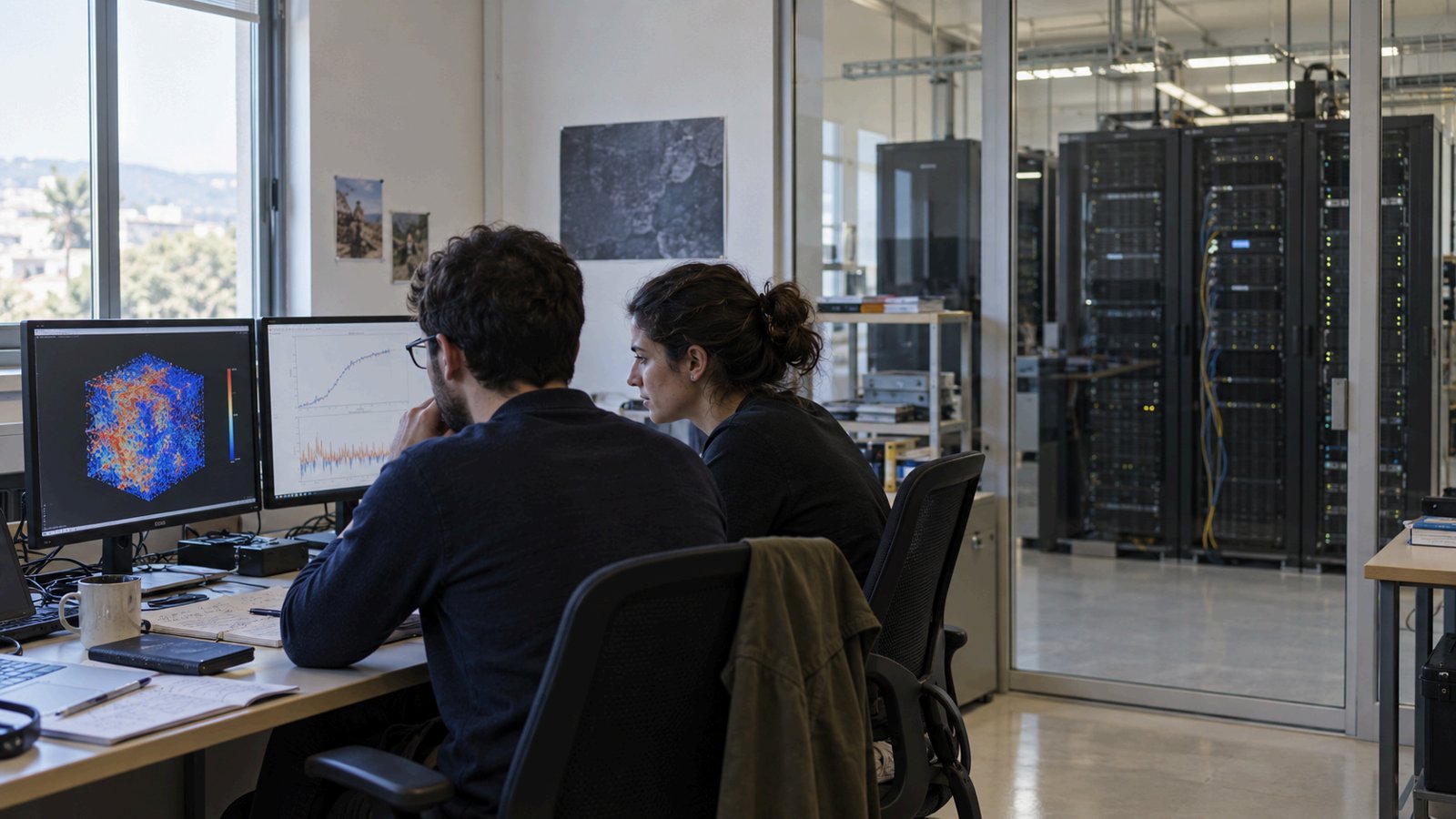
The clearest benefit is cost. Training and testing modern AI models requires computing power that can be prohibitively expensive for startups, small companies and university labs, pushing them towards infrastructure outside Europe. Pharos is meant to provide access to that power, plus the support needed to use it well. In a government example, a Greek health startup developing a tool to prioritise X-rays and CT scans runs into three problems: too little quality data, no safe and compliant way to manage it, and computing costs it cannot afford. Pharos is designed to help with all three.
A Greek-language AI capability
A subtler benefit is linguistic and cultural independence. Global models are trained on far more English than Greek, leaving Greek developers with fewer datasets, benchmarks and specialised tools. Greece already has open models such as Meltemi and Llama-Krikri-8B. Pharos can give that work more computing power and a clearer route from research into products people can use.
A regional network centred on Greece
Pharos does not operate in isolation. It anchors a set of AI Factory Antennas in neighbouring countries, including Cyprus and Malta, that connect back to DAEDALUS. That positions Greece as an AI hub for Southeast Europe, which makes the investment more productive than a purely domestic project would be.
Potential to retain technical talent
Finally, there is a potential talent benefit. Greece has long lost skilled engineers and researchers to opportunities abroad. Advanced computing infrastructure could make it easier for some of them to pursue ambitious work at home, although it is too early to know whether DAEDALUS and Pharos will affect decisions to stay in Greece or return from abroad.
If you run a startup, what can you actually do with Pharos?
Most coverage says little about how a startup would use Pharos in practice. It is easy to say Pharos gives you computing power, but it is harder, and more useful, to picture what you would actually build and how you would get in. Here is the practical version.
What Pharos is designed to offer
In practical terms, Pharos is designed to offer companies four resources that many could not afford or assemble on their own:
- Heavy compute on demand. Access to the DAEDALUS supercomputer for the expensive jobs: training a model from scratch, fine-tuning a large one, or running big batches of experiments that would cost a fortune on a commercial cloud.
- Tools and ready-made models. Pre-trained models you can build on instead of starting from zero, including Greek-language models available through Pharos, plus the standard AI tooling around them.
- Data, cleaned and legal to use. Access to quality datasets and help preparing your own, including anonymisation and cleaning so the data is safe and compliant to train on. Poor-quality data can undermine a model's performance, while non-compliant data can prevent a product from being deployed.
- People who have done it before. Expert teams who help you scope the project properly, avoid dead ends and move from a demo to something that works in production. This support layer is arguably the most valuable part for a small team.
Concrete examples of what you could build
Pharos deliberately focuses on three areas: health, the Greek language and culture, and sustainability. If your idea sits in or near one of those, you are in the sweet spot. A few realistic examples:
- Health. The government's own example is a startup building a tool that reads X-rays or CT scans, ranks them by urgency, and flags suspicious cases so hospitals see the risky patients first. Same pattern applies to lab-result analysis, patient-triage systems, or drug-discovery screening.
- Greek language. A customer-support chatbot, a legal- or contract-review tool, a transcription or translation service, or a document assistant that genuinely works in Greek rather than treating it as an afterthought. This is a real edge: many global models perform worse in Greek than in English, so a tool built and tested specifically for Greek can beat a general model on the local task it was designed for.
- Sustainability. Energy-demand forecasting for a utility, smart-grid optimisation, crop or irrigation planning for agriculture, wildfire-risk prediction, or shipping-route efficiency. Anything data-heavy in energy, environment or climate fits the mandate.
When it is worth it, and when it is not
Be honest with yourself about fit. Pharos is worth the effort if your product genuinely needs to train or fine-tune models, if you handle sensitive or specialised data (medical records, Greek-language text, sensor data) that global tools handle badly, or if cloud compute costs are already a real line item in your budget.
It is probably not worth it if you are simply calling an existing commercial AI through an interface and shipping a thin layer on top; for that, a normal cloud account is faster and simpler. Pharos is therefore most relevant to projects that require substantial computing power, specialised data or custom model development.
How access is expected to work
Pharos is intended to operate as a one-stop shop so that founders do not need supercomputing expertise before applying. According to the programme's stated model, Pharos staff will help applicants assess whether a project is suitable, estimate the resources it needs and prepare its data and technical setup. Access is intended for startups, small and medium-sized companies, researchers and public bodies, particularly teams that could not otherwise use this infrastructure.
Nevertheless this is still early. Pharos was still bringing its services online during 2026 and had reported only its first four customers by June, so founders should expect a young programme rather than a polished self-service portal. Second, several details were not public at the time of writing, including pricing, eligibility, computing allocations, waiting times, intellectual-property terms and onboarding speed. The most reliable move is to use the Pharos AI Factory website and ask for the terms that apply to a specific project.
Our take: promising, but the hard part is only starting
Most of the optimistic claims about Pharos and DAEDALUS come from the ministry, GRNET, EuroHPC or members of the consortium. That does not make the claims wrong, but it does mean that measured results should be kept separate from expected benefits.
The evidence so far supports a serious technical achievement, while the wider economic case remains unproven.
DAEDALUS's place in TOP500 settles the hardware question. The external benchmark ranked it 31st in June 2026, and Greece has secured national and European funding for the machine and the first three years of Pharos, but the harder test is whether the service around it becomes easy enough to use.
In terms of numbers, the useful measures are how many researchers, startups and public bodies receive computing time, how long they wait and how many projects reach real users. Four customers in June 2026 is a start, but it will matter only if the number grows and the programme shows what those teams achieve.
The same applies to the Greek-language model on the platform, making it available is useful, but adoption and measured performance will decide its value.
Pharos also has to bridge two cultures that move at different speeds, it is a state-owned company built around public research institutions, yet it wants to serve startups and commercialise products.
Public bodies must handle money carefully and follow rules that protect accountability while startups need quick decisions and room to experiment.
The law gives Pharos useful commercial powers, including the ability to manage intellectual property and create spin-offs, but founders will judge it by clear contracts, response times and the path from first contact to working access.
There is also a wider context that celebratory coverage tends to blur:
Greece is in the middle of a broader data-centre boom, with Microsoft building the country's first cloud region around Athens and other operators expanding across Attica. That boom has drawn criticism over energy and water use, and residents in Eastern Attica have taken their concerns to the Council of State.
The distinction is important because those objections concern the large commercial build-out, not specifically DAEDALUS, a public research machine whose measured power during the TOP500 benchmark was about 1.4 megawatts. Treating them as the same thing would be unfair to DAEDALUS and would obscure the separate questions raised by commercial projects.
Our overall view is that Greece has built a serious, well-funded research asset and a credible service around it, while the remaining uncertainties are execution and uptake.
If Pharos offers clear access, capable support and transparent terms, DAEDALUS could become an important part of the Greek technology economy. If it does not, Greece will still own an excellent supercomputer that too few people use. Both outcomes remain possible.
Resources
Primary and official sources. Secondary reporting is linked in the body of the article.
- TOP500, DAEDALUS system record - measured performance, theoretical peak, power and June 2026 ranking.
- Green500, June 2026 list - energy-efficiency ranking and measured power.
- GRNET, ARIS enters the TOP500 - the earlier Greek system's 2015 ranking and specifications.
- EuroHPC JU, Procurement contract for DAEDALUS - acquisition cost, funding split, consortium and access model.
- GRNET, Implementation of DAEDALUS and the Lavrion Data Centre - wider project budget, site, target performance and intended uses.
- GRNET, Management - Stefanos Kollias's position as board chair and emeritus professor at NTUA.
- European Commission CORDIS, Pharos project record - budget, dates, goals and participants.
- GRNET, Pharos AI Factory - programme structure, intended users, partners and services.
- Pharos AI Factory, Frequently Asked Questions - focus areas, budget, relationship with DAEDALUS and network connection.
- EuroHPC JU, AI Factory Antennas - regional links to Pharos.
- Meltemi: The first open Large Language Model for Greek - 2024 research paper and open-model release.
- Krikri: Advancing Open Large Language Models for Greek - peer-reviewed 2025 paper on Llama-Krikri-8B.
- Pharos at the Growthfund Investor Summit 2026 - first customers and model announcement.
- National Printing Office, Law 5263/2025 - establishment and powers of Hellenic Artificial Intelligence Factory S.A.